


Winter light is thin. By three in the afternoon, a room that felt generous in June can look flat, and no amount of central heating fixes a sofa that reads as cold. The quickest way to change that is not a new colour scheme. It is texture: the throws, cushions and rugs you layer over what you already own. Get the fabrics and tones right and the same room feels softer, deeper and a good deal more inviting.
Begin With the Light You Actually Have
Before buying anything, spend one evening looking at the room properly. North-facing rooms get cool, even light all day; south-facing rooms can be bright but flat after dark. In winter, the light you live with is mostly electric, so judge the room at seven o'clock with the lamps on and the big light off.
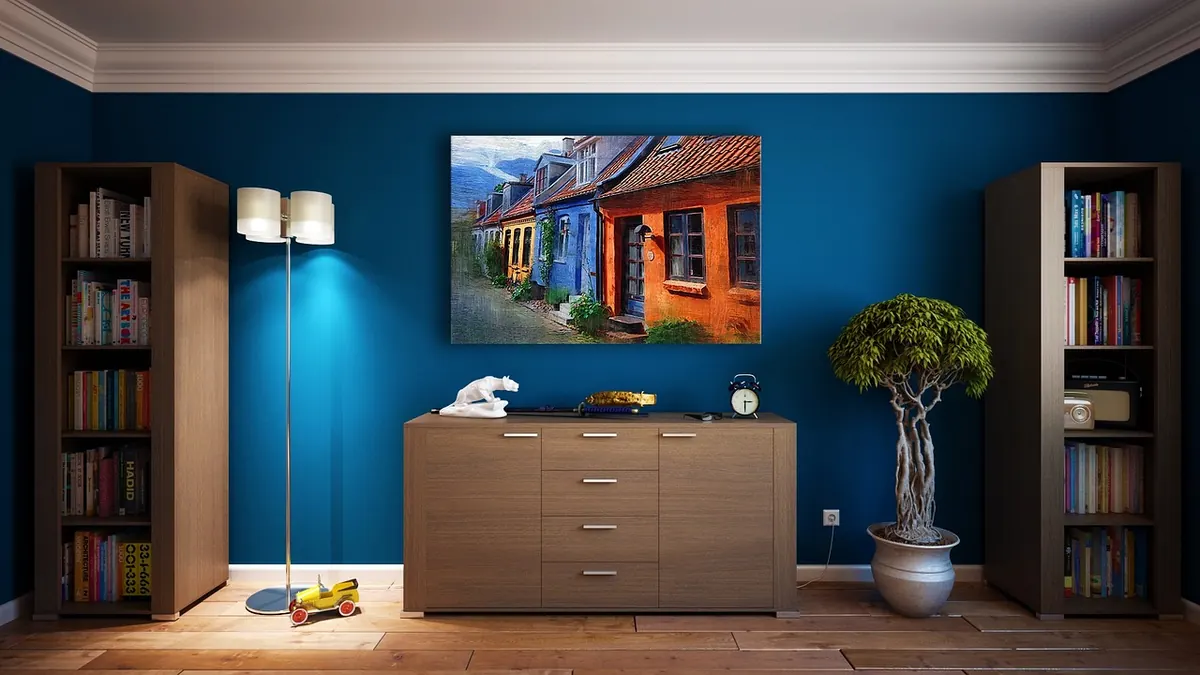
Take a photo. It is easier to see the dominant colours when they are on a screen: floorboards, wall colour, sofa, curtains. Then decide which way you want to push. A cool room of greys, blues and white settles down quickly with oatmeal, camel, clay or rust. A room that is already creamy and beige benefits from depth instead — charcoal, olive, chocolate or a deep plum.
Why Texture Does More Than Colour
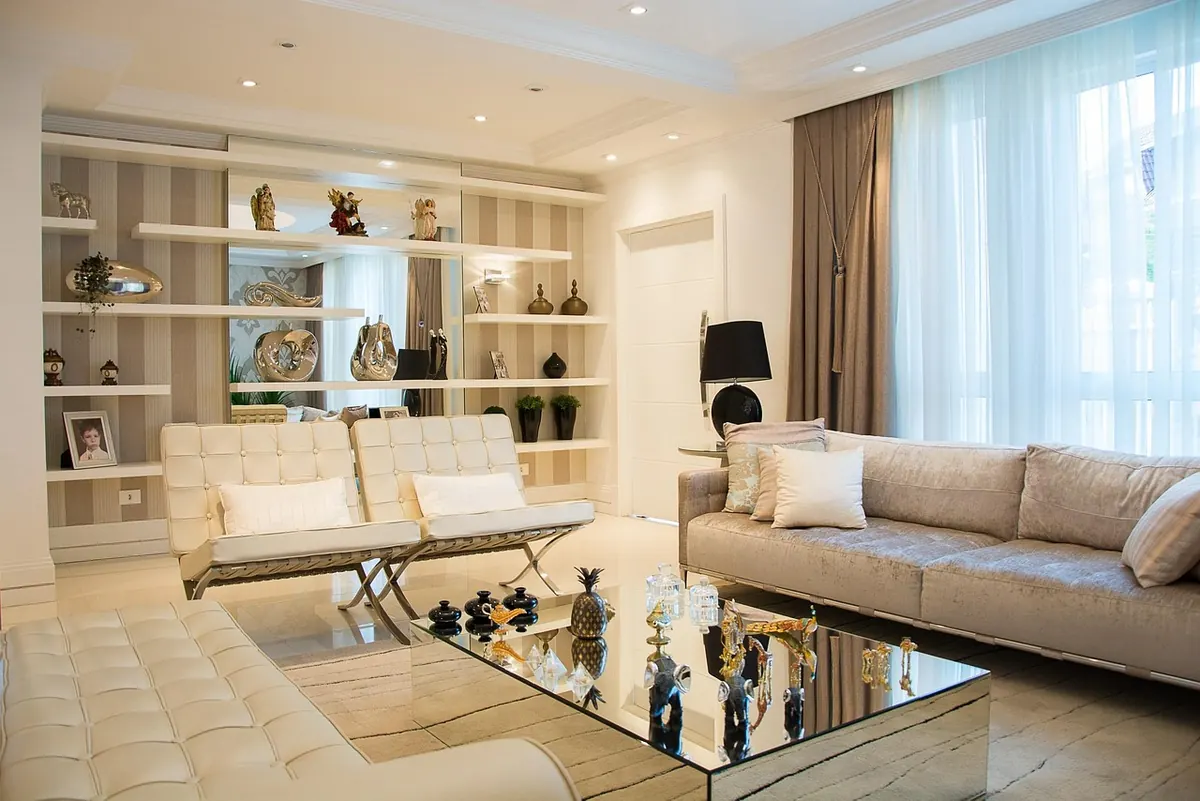
Texture changes how light behaves. Smooth surfaces — leather, glass, glossy paint, a flat weave — bounce light back and read as hard and cool. Matte, piled and brushed surfaces absorb it, which is why boucle, sheepskin, chunky wool, corduroy and slubby linen make a room feel warmer even when the colour barely changes.
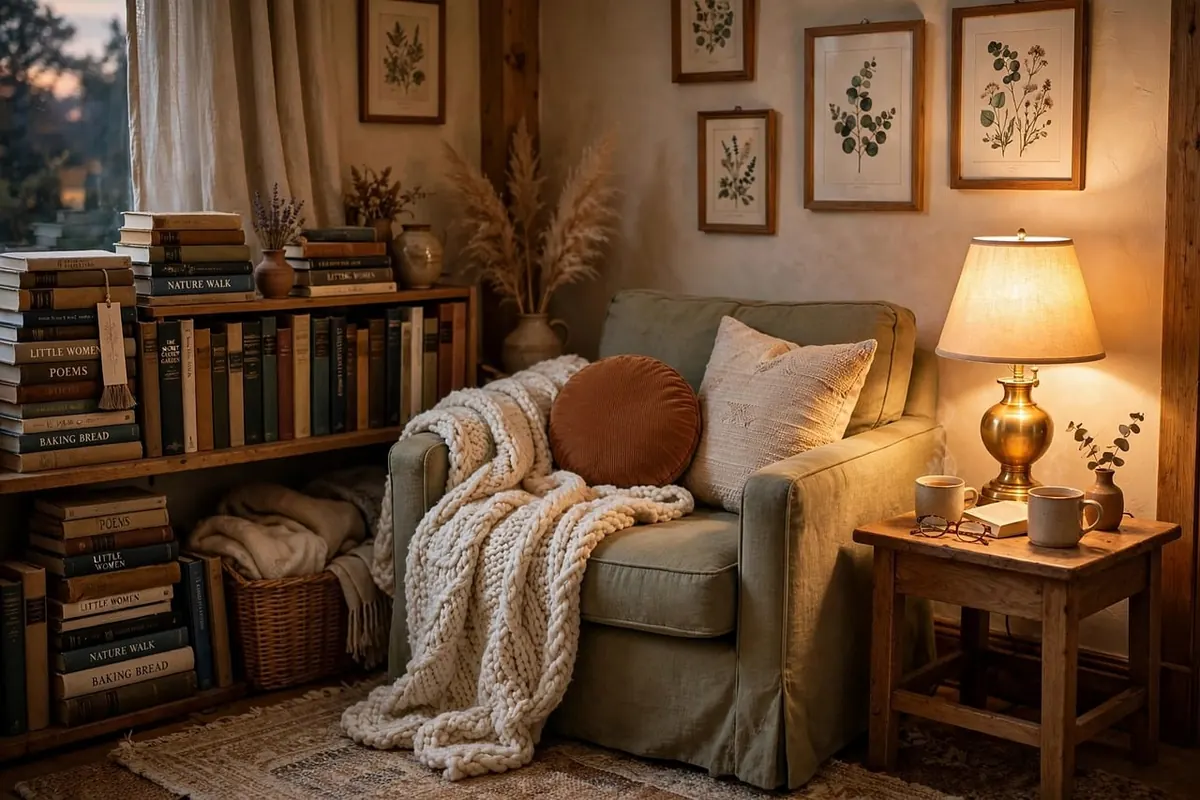
A useful test: within arm's reach of where you sit, you want at least three textures touching. One smooth, one nubby, one genuinely soft. A cotton velvet cushion against a wool throw on a linen sofa does more for a room than any paint colour. Keep sheen in small doses; too much satin, velvet and polished metal together starts to look like a hotel lobby.
Throws: The Easiest Layer to Add
If you change one thing, change this. A throw draped loosely over a sofa arm or folded along the back adds warmth without rearranging the room. Resist spreading it flat across the whole sofa — it looks like a bedspread and hides the shape of the furniture you paid for.
Sizes matter more than most people expect. Roughly 130 x 170cm suits an armchair or the end of a single bed; 150 x 200cm sits properly on a three-seater or across a double bed. One or two per room is plenty. Five looks like laundry day.
On materials: wool and wool blends hold real warmth, cotton and linen are mostly decorative, and fleece or faux fur gives visual depth cheaply. Chunky knits are lovely but snag, so keep them off the arms of chairs where pets and zips live. Keep a folded throw in a basket by the fire so it is easy to reach on a cold evening.
Cushions: Where Most Rooms Go Wrong
Cushions are the cheapest layer and the easiest to overdo. A few rules keep a sofa looking arranged rather than abandoned:
- Work in odd numbers — three or five on a sofa, two on an armchair.
- Vary the size: a 50cm square, a 45cm square and a 30 x 50cm lumbar cushion in the mix stops everything looking uniform.
- Give each cushion a job: one plain, one heavily textured, one patterned.
- Pull one colour through all of them from the rug, a painting or the curtains, so they belong together.
- Mix fillings. Feather and down slumps beautifully; hollowfibre holds a crisp shape and suits anyone with allergies.
- Plump them weekly and give the top corners a light chop to soften the line.
Zip covers are worth seeking out. You can swap fronts between seasons and store the rest flat in a drawer, which is far easier than finding space for whole cushions.
Rugs: Grounding the Room
A rug is what makes a seating area read as a room rather than furniture pushed into a corner. Getting the size right matters more than the pattern. At minimum, the front legs of the sofa and chairs should sit on the rug; in a larger room, aim for all the main furniture to be on it, with a border of bare floor around the edge. A 200 x 300cm rug is a common fit for a living room seating zone, but measure with masking tape on the floor before you commit.
Layering works well and can save money: a smaller patterned rug over a large plain jute or sisal flatweave gives you warmth underfoot plus a design focal point. Always use an anti-slip underlay, especially on wood or tile, and remember it adds a little softness and protects the floor beneath.
On pile and fibre: wool wears well and feels warm, jute is tough but scratchy in bare feet, and viscose looks silky but marks at the first sign of a spilled drink.
Choosing Tones That Read Warm
Warmth in a room comes from the middle of the spectrum, not the extremes. Oatmeal, stone, camel, mushroom and clay are the reliable warm neutrals. Grey, blue-grey and stark white are cool, which is fine in a sunny room and bleak in a dim one. Depth comes from charcoal, olive, aubergine and rust.
Contrast rather than match. If your sofa is cream, a mid-tone rug and a darker throw will make the whole arrangement look considered. If the room is small and dark, avoid heavy navy and grey at floor level — swapping a grey rug for oatmeal lifts the space instantly.
Test fabric samples in the room, in the evening, under your own lamps. Bulbs make a genuine difference: cool white bulbs turn beige grey, while warm bulbs around 2700K make oatmeal look golden. Buying fabric from a shop under fluorescent light is how most colour mistakes happen.
Layering Order That Works
Build the room in this sequence and you will rarely have to undo anything:
- Clear the base: hoover, straighten the sofa, remove anything you would not choose again.
- Anchor with the rug. Everything else sits on top of this decision.
- Add the largest textile — a throw over the sofa back or arm.
- Build the cushion stack in odd numbers, mixing sizes and weaves.
- Finish with one small textural extra: a sheepskin on a wooden chair, a knitted runner on a sideboard, a felt basket by the door.
- Live with it for a week before adjusting. Texture needs a few evenings of real light to prove itself.
The aim is not a showroom. It is a room where you want to sit for another hour, with something soft within reach and colours that hold their warmth after dark.